
Key Takeaways:
Understanding the differences between monolithic and microservices architecture is crucial for effective application development.
Choosing the right architecture can enhance scalability and flexibility while optimizing performance.
American Tech Labs can guide you in making informed decisions tailored to your unique business needs.
Monolithic vs. Microservices Architecture: Which is Right for Your App?
Introduction: Navigating the Architectural Dilemma
In the rapidly evolving tech landscape, companies face a key challenge: how to effectively structure their applications for max performance and scalability. *Monolithic or microservices architecture—what’s the best fit?* This post tackles this critical question, offering insights on both architectures to help you make the right choice for your application needs.
1. Understanding Monolithic Architecture
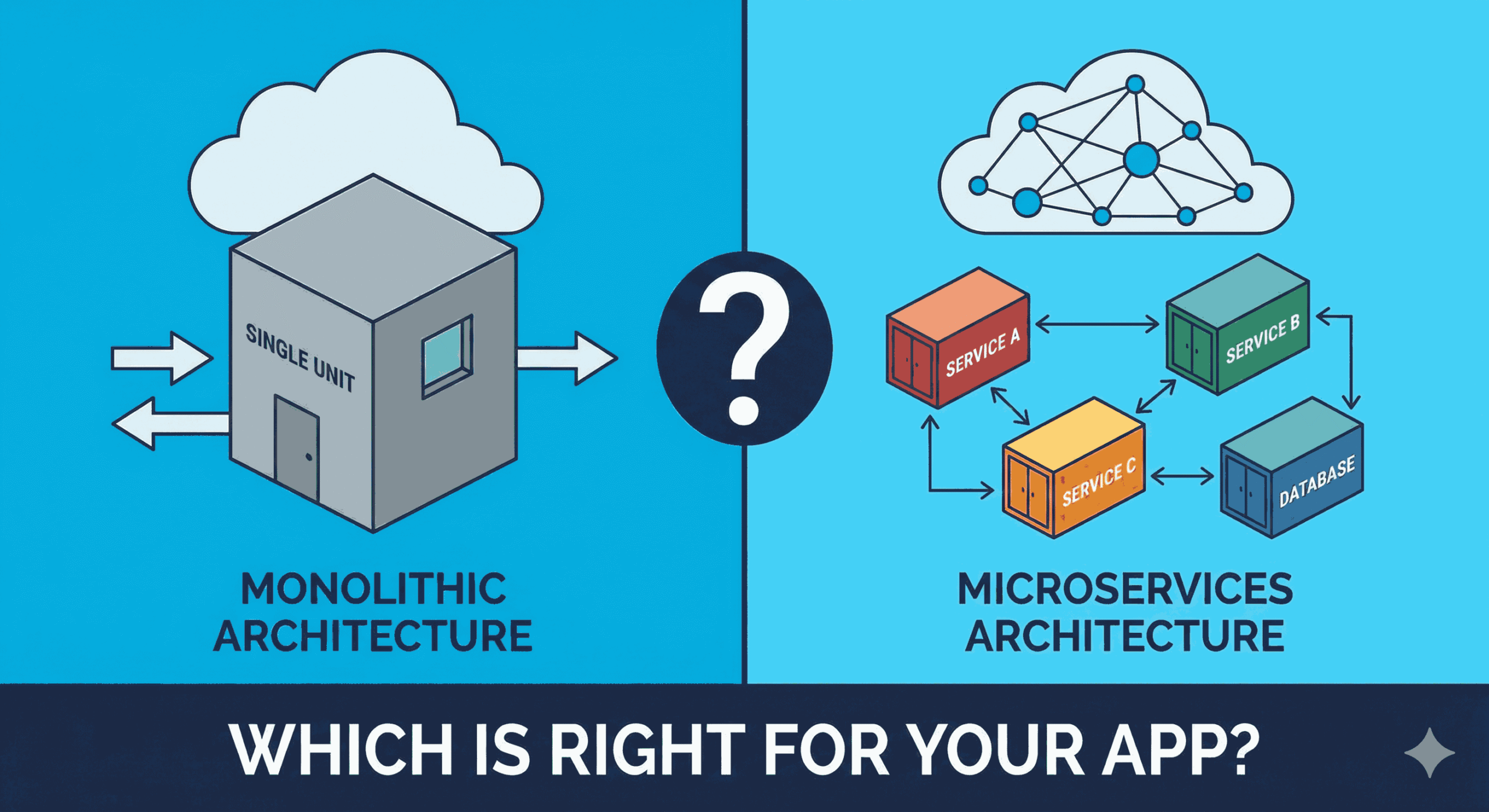
Monolithic architecture refers to a single unified unit where all components of an application operate as one. Here’s what to consider:
– **Simplicity:** Easier to develop, test, and deploy as one cohesive unit.
– **Performance:** Generally boasts faster execution since components are dependent and run in the same process.
– **Maintenance Challenges:** As an application evolves, a large monolithic codebase can become unwieldy and challenging to manage.
2. Exploring Microservices Architecture
Microservices architecture structures an application as a collection of small, independent services. Benefits include:
– **Scalability:** Easily scale individual components based on specific demands.
– **Resilience:** Failure in one microservice does not affect the entire system, enhancing overall application stability.
– **Technology Diversity:** Freedom to use different tech stacks for different services, optimizing performance and capabilities.
3. When to Choose Monolithic Architecture
Monolithic architecture can be advantageous in certain scenarios:
– **Startups or Smaller Applications:** Ideal for small teams developing limited-scale projects.
– **Faster Time to Market:** A simplified deployment process can accelerate getting your product to market.
– **Easier Debugging:** Issues can be resolved more quickly as everything is contained in one code base.
4. When to Opt for Microservices Architecture
Microservices architecture shines in more complex scenarios:
– **Large Scale Applications:** Suitable for enterprises that require scalability, reliability, and flexibility.
– **Rapid Development Cycles:** Facilitate agile methodologies by allowing teams to work on separate services concurrently.
– **Continuous Deployment:** Supports frequent updates and innovations in a dynamic market.
5. Key Considerations for Architecture Choice
Before making your decision, consider the following:
– **Team Size and Expertise:** Larger and more specialized teams are more suited for microservices.
– **Project Complexity:** Analyze the scope and long-term vision of your application.
– **Funding and Resources:** Microservices may require more upfront investment in infrastructure and management.
6. Common Pitfalls to Avoid
Both architectures come with challenges. Here are some traps to steer clear of:
– **Ignoring Scalability Needs:** Choose an architecture that aligns with your growth forecast.
– **Underestimating Maintenance:** Assure you have the resources to maintain your architecture as it grows.
– **Overlooking Security:** Each microservice introduces additional security threats that need to be addressed.
7. Harnessing Expert Guidance for Optimal Decisions
Making the right architectural choice is crucial for your application’s success. Consider engaging with experienced professionals who can:
– Provide tailored consultation based on your specific business needs.
– Help conduct a thorough analysis of your current system and future requirements.
– Guide you in implementing best practices for your chosen architecture.
People Also Ask
What is the main difference between monolithic and microservices architecture?
Monolithic architecture integrates all components into a single unit, while microservices architecture breaks down applications into smaller, independent services.
What are the advantages of using microservices?
Microservices promote scalability, resilience, and allow diverse technology stacks, making them suitable for complex applications.
Can a monolithic application be converted to microservices?
Yes, although it requires careful planning and execution to ensure a smooth transition and maintain application functionality.
Which architecture is more cost-effective?
Monolithic architecture may be more cost-effective for small projects, but microservices can yield greater long-term value for larger, scalable applications.
How do I decide on the right architecture for my app?
Assess your project’s complexity, team size, and your long-term growth objectives to determine the most suitable architecture.
Conclusion: Make an Informed Choice for Your Application
Choosing between monolithic and microservices architecture is a pivotal decision that can significantly impact your application’s performance, scalability, and maintenance. American Tech Labs is here to offer expert insight and guidance tailored to your specific needs. Ready to take the next step? Book a consultation with American Tech Labs today and let us assist you in navigating your architectural decisions effectively.