
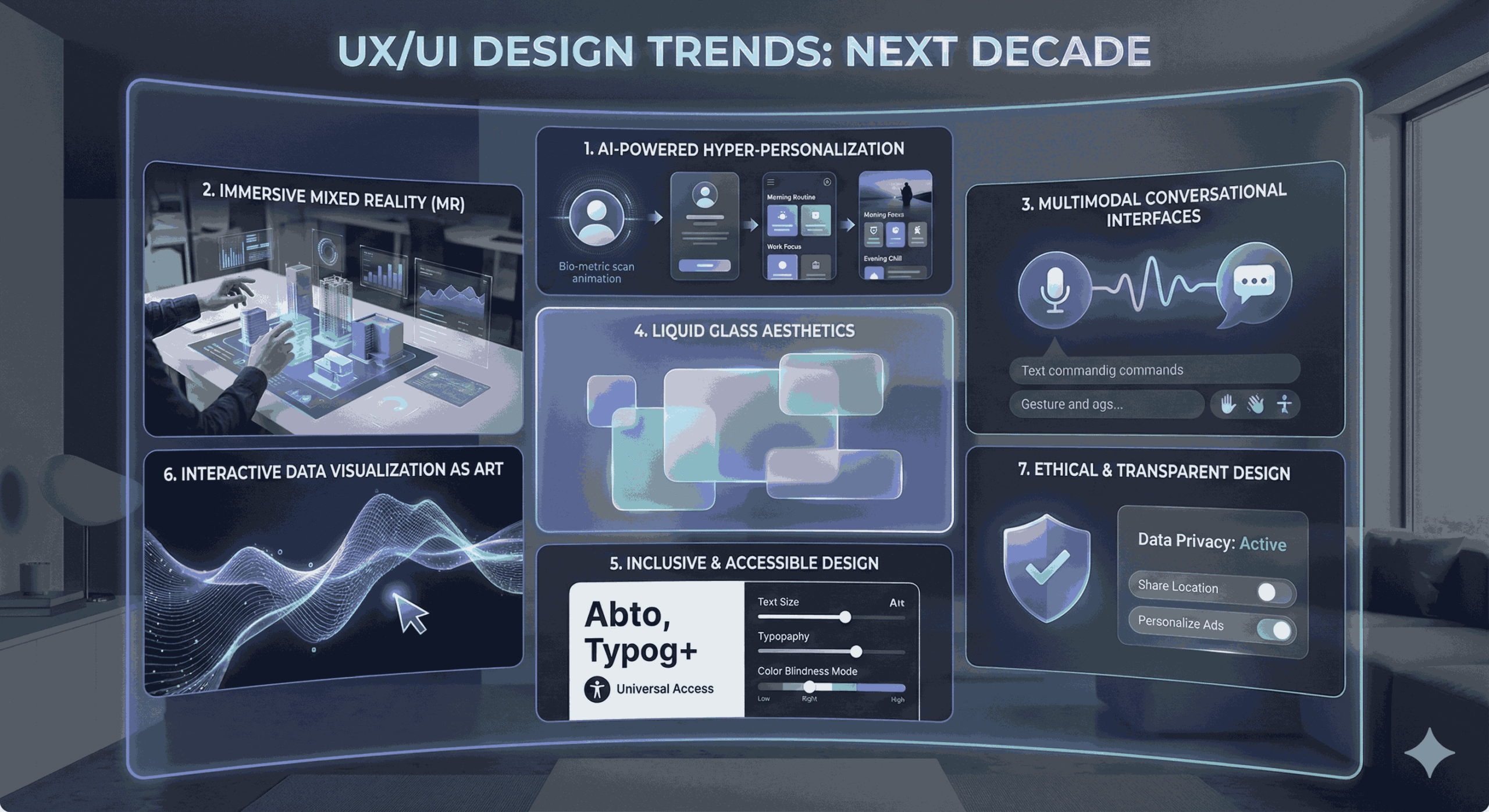
Key Takeaways:
Understanding emerging UX/UI design trends is essential for staying competitive.
Implementing these trends can enhance user engagement and satisfaction.
Prioritize user feedback to ensure designs meet real needs.
7 UX/UI Design Trends That Will Dominate the Next Decade
Introduction: The Future of UX/UI Design
As technology continues to evolve, so do user expectations. In a rapidly changing digital landscape, businesses face a pressing challenge: How can they create user experiences that not only engage but also retain users long-term? The answer lies in embracing cutting-edge UX/UI design trends. This blog post will explore seven key trends that promise to shape the digital experience over the next decade, providing actionable insights for designers and businesses alike.
1. Minimalism: Less is More
The minimalist approach remains a favorite among designers, emphasizing functionality and clarity. This trend focuses on essential elements and eliminates distractions. Consider the following:
– Use ample white space to draw attention to key areas.
– Opt for simple typography and clean layouts.
2. Voice User Interface (VUI)
With the rise of smart speakers and voice-activated devices, integrating VUI into your designs will be critical. VUI allows users to interact through voice commands, creating a hands-free experience that enhances accessibility. Key considerations include:
– Designing for natural language processing.
– Ensuring responses are contextually relevant.
3. Dark Mode
Dark mode is gaining traction for its aesthetic appeal and reduced eye strain. Implementing this feature can enhance user satisfaction and extend session durations. Tips for optimizing dark mode include:
– Use color contrasts carefully to maintain readability.
– Provide user customization options for color schemes.
4. Micro-Interactions
Small, subtle animations can greatly enhance user engagement. These micro-interactions provide feedback on user actions, making interfaces feel more intuitive. Examples include:
– Button animations when hovered over or clicked.
– Progress indicators during loading sequences.
5. Augmented Reality (AR)
AR is transforming user experiences by allowing users to visualize products in their environment. Brands can leverage this technology for enhanced storytelling and immersive experiences. Consider:
– Integrating AR features for product previews.
– Offering gamified experiences that engage users.
6. Personalization
Users now expect personalized experiences tailored to their preferences and behaviors. Implementing algorithms that learn from user interactions creates a more relevant and engaging environment. Strategies include:
– Customizing content and product recommendations.
– Using user data responsibly while ensuring privacy.
7. Sustainable Design
As sustainability becomes paramount, eco-friendly design practices are gaining popularity. Designers can prioritize resources, offering solutions that appeal to the environmentally conscious consumer. Elements to implement include:
– Eco-friendly color palettes and materials.
– Transparent messaging about sustainability efforts.
Why User Feedback is Essential
To effectively implement these trends, gathering user feedback is vital. Conducting user testing, surveys, and utilizing analytics can provide insights into user preferences and pain points. This feedback loop will allow you to refine designs and ensure alignment with user needs.
Actionable Tips for Designers
- Stay Informed: Regularly follow industry news and research to keep abreast of emerging trends and user expectations.
- Prototyping: Create prototypes to test ideas quickly before full implementation.
- Usability Testing: Conduct frequent usability tests to identify friction points in your design.
People Also Ask
What are the top UX design trends for the next decade?
Key trends include minimalism, voice user interfaces, dark mode, micro-interactions, augmented reality, personalization, and sustainable design.
How can I enhance the user experience on my site?
Focus on clear navigation, intuitive design, and incorporating user feedback into your development process.
What is the importance of micro-interactions in design?
Micro-interactions provide feedback, making interfaces feel more responsive and improving overall user engagement.
How does personalization improve user engagement?
Personalization creates a more relevant experience by tailoring content and features to individual user preferences.
Why is sustainable design gaining popularity?
Sustainable design appeals to environmentally conscious consumers and reflects a brand’s commitment to responsible practices.
Conclusion: Embrace the Future of Design
By adopting these UX/UI design trends, businesses can create more engaging and user-centric experiences that stand the test of time. Staying ahead in the digital landscape requires consistent innovation and a commitment to understanding user needs. Ready to elevate your design strategy? Book a consultation with American Tech Labs today and discover how our expert team can assist you in implementing the latest design trends effectively.