Key Takeaways:
Choosing the right frontend framework is crucial for your development project.
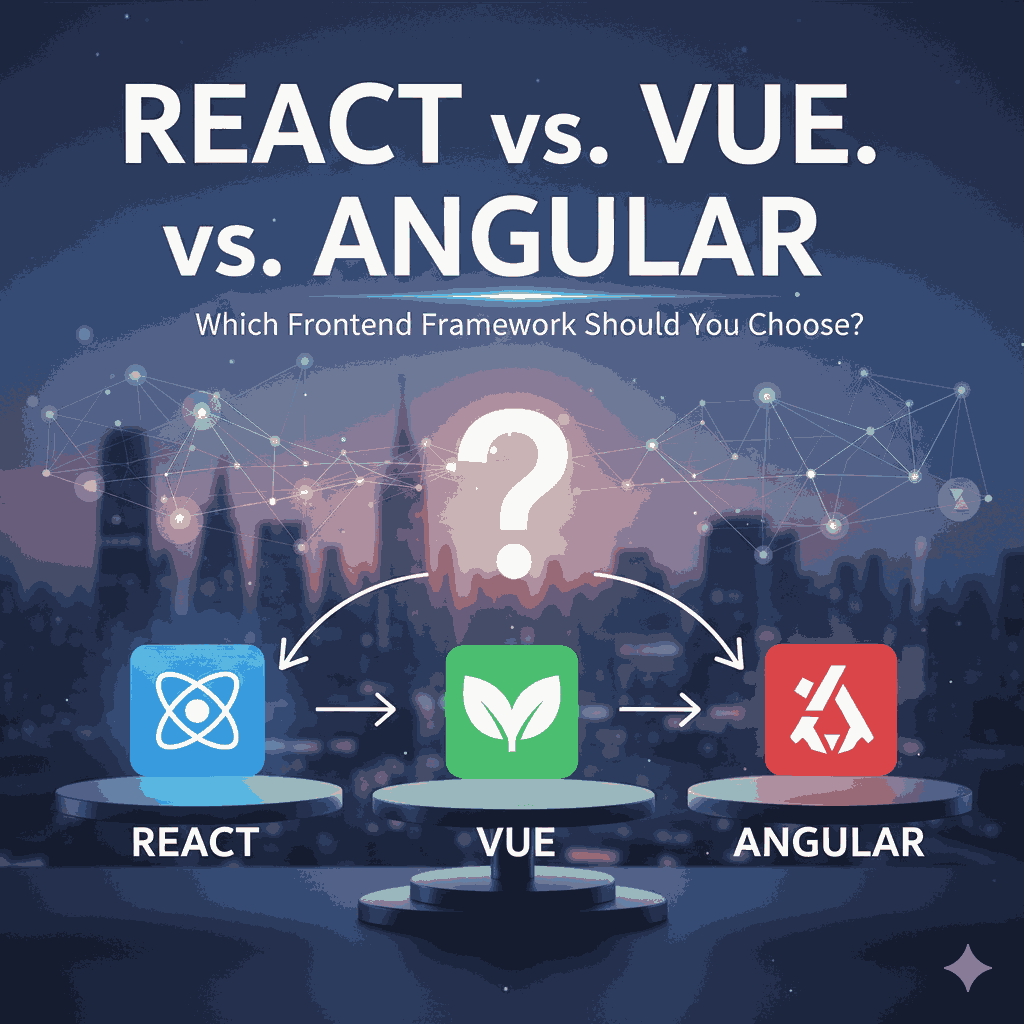
React, Vue, and Angular each have unique strengths tailored to specific needs.
Consider the project’s scale, team expertise, and future maintenance before making a decision.
Introduction: The Quest for the Perfect Frontend Framework
In the rapidly evolving world of web development, businesses are often faced with a pivotal question: Which frontend framework should I choose for my project? This decision can significantly influence user experience, maintainability, and scalability. As developers, you want a solution that meets both immediate needs and future demands while providing an engaging user interface. In this comprehensive guide, we’ll compare React, Vue, and Angular, examining their features and helping you determine the best fit for your development requirements.
Framework Overview: React, Vue, and Angular
1. React
React is a library developed by Facebook that allows developers to build user interfaces through a component-based architecture. Its virtual DOM optimizes performance, making it one of the most popular choices for dynamic web applications.
2. Vue
Vue is a progressive framework that focuses on building user interfaces in a flexible way. Its simplicity and versatility make it an appealing choice for both small and large applications.
3. Angular
Angular, developed by Google, is a robust framework that provides a comprehensive solution for building large-scale applications. It comes with a suite of tools that streamline development, making it an excellent choice for enterprises.
Comparative Analysis: Key Features
1. Performance
Performance varies by framework and the specific needs of your application:
- React: With its virtual DOM, React offers excellent performance for applications with frequent updates.
- Vue: Vue also employs a virtual DOM for efficient rendering, making it comparable to React in many scenarios.
- Angular: Angular’s two-way data binding can lead to performance issues in larger applications if not managed carefully.
2. Learning Curve
The ease of onboarding new developers is another important consideration:
- React: Its focus on JavaScript allows for a relatively short learning curve, especially for those familiar with ES6.
- Vue: Vue’s documentation is praised for its clarity, making it very beginner-friendly.
- Angular: Angular has a steeper learning curve due to its comprehensive nature and TypeScript use.
3. Ecosystem and Community
A supportive community can significantly impact your project:
- React: Boasts a large community and rich ecosystem, providing numerous libraries and tools.
- Vue: While smaller than React’s, Vue’s community is rapidly growing, with many resources available.
- Angular: Backed by Google, Angular has a solid community, though it doesn’t match the breadth of React’s ecosystem.
Key Considerations for Choosing a Framework
1. Project Requirements
Define the goals and complexity of your application. For instance, if you’re building a large enterprise solution, Angular could be ideal. For simpler web apps or those requiring quick setups, Vue may be more suitable.
2. Team Expertise
Assess your team’s skill level. If your developers are well-versed in JavaScript, React or Vue might be easier to adopt. For teams with experience in TypeScript, Angular could be advantageous.
3. Long-Term Maintenance
Consider the long-term maintenance of your application. React and Vue benefit from flexible architectures that can adapt as your project evolves. Angular’s comprehensive structure may require more upfront investment in learning but can provide robust solutions for large applications.
Actionable Tips for Successful Framework Implementation
- Prototype Early: Create quick prototypes using different frameworks to assess how well they meet your project needs.
- Evaluate Long-Term Needs: Think about future features and scaling while selecting a framework.
- Stay Updated: Follow framework updates and community best practices to ensure your application remains modern and efficient.
People Also Ask
Which framework is the best for startups?
React and Vue are often preferred by startups for their flexibility and ease of integration.
Is it possible to switch frameworks later?
Yes, but switching frameworks can be complex and resource-intensive. It’s best to choose wisely from the start.
What is the most popular frontend framework?
React remains the most popular choice, followed closely by Angular and Vue.
Can I use React with other libraries?
Absolutely. React is designed to integrate well with various libraries and frameworks.
Does one framework have better SEO than others?
React, Vue, and Angular have SEO capabilities, but server-side rendering capabilities can enhance SEO optimization.
Conclusion: Making Your Choice
The decision between React, Vue, and Angular ultimately depends on your project’s specific requirements and your team’s strengths. Each framework has distinct advantages that can contribute to your application’s success. By carefully considering your project’s needs, team expertise, and future growth, you can make an informed decision that enhances your development process.
If you’re ready to elevate your web application with the right frontend framework, book a consultation with American Tech Labs today. Our experts are here to guide you through your options and help you build a solution tailored to your business.