
10 Branding Strategies to Make Your Startup Look Like a Fortune 500.
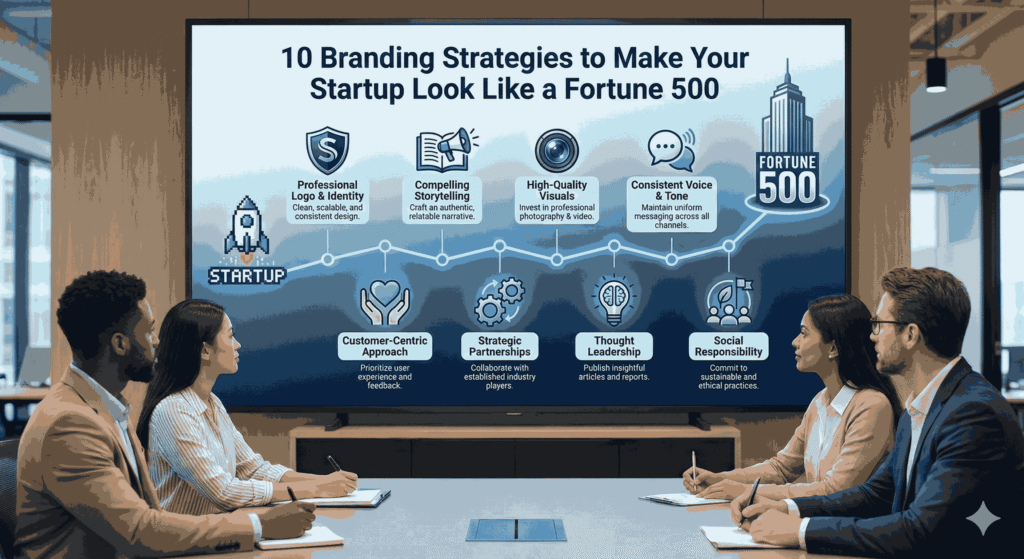
Key Takeaways:Implementing effective branding strategies is essential for startups aiming to emulate the success of Fortune 500 companies. Focus on creating a distinct brand identity, leveraging digital marketing, enhancing customer experience, and maintaining consistent messaging to build a trustworthy and competitive brand presence. 10 Branding Strategies to Make Your Startup Look Like a Fortune 500 Introduction: The Quest for a Strong Brand Identity In a crowded marketplace, how can startups compete with established giants? The answer lies in strategic branding. This guide highlights ten actionable branding strategies that will elevate your startup, instill confidence in potential customers, and position you as a formidable player, regardless of your size. 1. Define Your Brand Purpose Your startup’s mission serves as the foundation for your branding: Authenticity: Clearly articulate why your business exists and what problems it solves. Emotional Connection: Build a narrative that resonates with your target audience, fostering loyalty and trust. 2. Develop a Unique Brand Identity A compelling visual identity distinguishes you from competitors: Logo Design: Create a memorable logo that reflects your brand’s personality. Color Palette: Choose colors that evoke the right emotions and meaning associated with your brand. Typography: Use fonts consistently to establish a recognizable brand voice. 3. Craft a Consistent Brand Message Clarity and consistency are crucial: Brand Voice: Establish a tone of voice across all channels that matches your brand’s personality. Core Messaging: Ensure your key messages are clear and consistently communicated in all marketing materials. 4. Leverage Digital Marketing Strategies Digital channels can exponentially amplify your brand’s reach: Social Media: Engage with your audience through relevant platforms, sharing valuable content. SEO Optimization: Implement best SEO practices to improve your visibility on search engines. Content Marketing: Produce informative content that establishes your authority in your industry. 5. Foster Customer Relationships Your customers should always feel valued: Personalization: Tailor experiences and communications to individual customer preferences. Feedback Mechanism: Create avenues for customer feedback and act on it to continually improve. 6. Invest in Brand Storytelling People connect with stories; tell yours effectively: Origin Story: Share how your company started and the journey you’ve undertaken. Client Stories: Highlight successful outcomes using testimonials and case studies. 7. Position Yourself as an Expert Build credibility in your industry: Thought Leadership: Share insights through blogs, webinars, and speaking engagements. Networking: Collaborate with industry influencers to broaden your brand’s reach. 8. Create a Memorable Customer Experience Your customer interactions should reflect your brand values: User-friendly Interfaces: Ensure your website and applications are intuitive and easy to navigate. Exceptional Service: Train your team to deliver outstanding service that leaves a lasting impression. 9. Use Brand Partnerships Strategically Aligning with complementary brands can enhance credibility: Collaborative Marketing: Explore joint promotions and co-branded content with reputable partners. Sponsorship: Consider sponsorship opportunities at events that align with your brand values. 10. Monitor and Adapt Your Brand Strategy Stay relevant by evolving your brand in response to market changes: Analytics: Use data analytics to gauge your branding efforts and identify areas for improvement. Market Trends: Keep abreast of industry trends and pivot your branding approach as necessary. People Also Ask What is a branding strategy? A branding strategy is a long-term plan for the development of a successful brand in order to achieve specific goals, including increasing awareness and fostering customer loyalty. How can I create a brand identity? Define your brand’s mission, create a unique visual identity, and establish a consistent brand message that reflects your values and resonates with your audience. Why is customer experience important for branding? A positive customer experience reinforces brand loyalty and encourages customers to advocate for your brand, enhancing its reputation and reach. How does SEO contribute to branding? Effective SEO strategy increases your brand’s visibility online, helping you reach potential customers searching for related services or products, ultimately improving brand recognition. What role does storytelling play in branding? Storytelling humanizes your brand and fosters emotional connections, making it easier for customers to relate to and remember your business. Conclusion: Take the Leap Towards Fortifying Your Brand To make your startup resonate like a Fortune 500 company, adopting these strategic branding approaches is crucial. By investing time and resources into your brand identity and customer relationships, you can build a powerful brand that stands out in the marketplace. Ready to elevate your branding strategy? Contact American Tech Labs for a consultation and take the first step towards establishing your brand’s legacy.
How to Choose the Right Custom Software Development Company in 2026

Key Takeaways:Choosing the right custom software development company is crucial for the success of your business project. Focus on key factors like technical expertise, portfolio assessment, communication skills, development methodologies, pricing models, and post-launch support to make a well-informed decision. How to Choose the Right Custom Software Development Company Introduction: The Importance of Selecting the Right Partner Hiring a software development partner can be a daunting task for business owners looking to bring their ideas to life. With so many options available, *how can you ensure that you select a company that meets your needs and drives your project to success?* This guide will help you navigate the essential steps and considerations to find the right custom software development firm for your business in 2025. 1. Assess Technical Expertise It’s vital to evaluate the technical skills of a software development company. Here’s what to look for:– **Technology Stack:** Ensure the company is proficient in the programming languages and technologies relevant to your project.– **Industry Experience:** Look for developers who have previously worked on projects similar to yours, indicating their familiarity with your specific needs.– **Certifications and Training:** Inquire about the team’s qualifications and ongoing training to stay updated with industry trends. 2. Review Their Portfolio A strong portfolio can provide insights into a company’s capabilities:1. **Diversity of Projects**: Check for various projects across different industries and complexities, showcasing versatility.2. **Case Studies**: Look for detailed case studies that highlight the challenges faced, the solutions provided, and measurable outcomes.3. **Client Testimonials**: Seek feedback from previous clients to understand their experience and level of satisfaction. 3. Evaluate Communication Skills Effective communication is key to a successful partnership:– **Responsiveness**: Assess how quickly they respond to inquiries during the initial stages.– **Clarity**: Ensure they can clearly articulate their ideas, processes, and any issues that may arise.– **Cultural Fit**: Consider whether their communication style aligns with your company’s culture to facilitate smoother collaboration. 4. Understand Development Methodology The development approach can significantly impact your project’s outcome:– **Agile Methodology**: Many companies adopt Agile practices for flexibility and iterative progress; ensure they do.– **Project Management Tools**: Inquire about tools they use to manage tasks and timelines effectively.– **Quality Assurance**: Ensure there are rigorous testing phases to deliver a bug-free product. 5. Consider Pricing Models Understand the different pricing structures available:– **Fixed Price**: Suitable for well-defined projects with specific requirements.– **Time & Materials**: Works well for projects needing flexibility where changes may occur.– **Milestone-based Payments**: Allows for payments to be made as portions of the project are completed, creating accountability. 6. Inquire About Post-Launch Support The relationship doesn’t end at launch:– **Maintenance Services**: Confirm if they offer ongoing support, including software updates and bug fixing.– **User Training**: Check if they provide training for your staff on how to use the new system effectively.– **Feedback Loops**: Ensure they have methods for collecting user feedback to improve the software over time. Key Considerations for a Successful Partnership Monitor these factors for a fruitful collaboration:– **Regular Check-Ins**: Schedule updates and reviews throughout the development process.– **Flexibility to Adapt**: Ensure the company is open to changing requirements based on evolving business needs.– **Long-Term Vision**: Select a partner who is interested in your growth and willing to support you as your business evolves. People Also Ask What should I look for in a software development company? Look for technical expertise, a solid portfolio, strong communication skills, a suitable development methodology, and post-launch support. How do I evaluate a software development company’s portfolio? Examine the diversity of projects, read case studies, and look for client testimonials to gauge the company’s expertise and reliability. What is the best communication method with developers? Establish clear, open channels such as regular meetings, emails, or project management tools that suit both parties. How can I ensure quality in software development? Inquire about their testing protocols throughout the development lifecycle and the QA measures they have in place. What are common pricing models for software development? Common models include fixed price, time and materials, and milestone-based payments; choose one that best fits your project. Conclusion: Take Action to Secure Your Business Success Choosing the right custom software development company is a critical step in achieving your business objectives. With a careful evaluation of the factors discussed, you can find a partner that not only meets your technical needs but also aligns with your vision for the future. Ready to make a strategic choice? Reach out for a consultation today and take the first step toward successful software development.